Token types & pickers
Every token type gets a fitting editor, from a text field to a full colour picker or a structured editor for composite tokens.
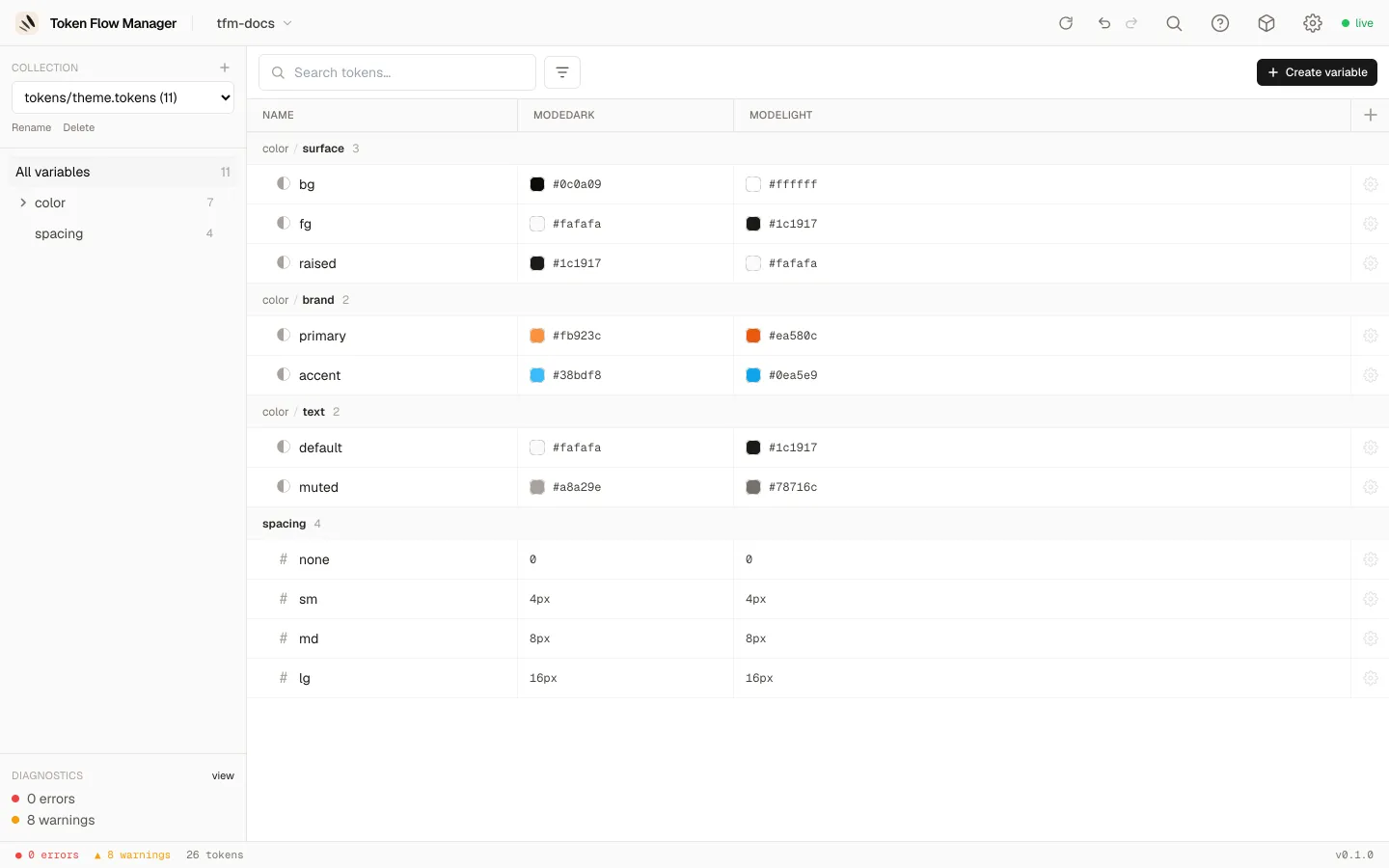
Two dialects, one model
The same tokens ship in two JSON dialects, and both open the same way:
| On disk | Written by |
|---|---|
$value / $type / $description |
DTCG 2025.10, the spec |
value / type / description |
the Tokens Studio Figma plugin |
The dialect is detected per token, so a mixed file works too, and the diagnostics panel tells you what was found. Two rules matter in practice:
- A file is written back in its own dialect. Editing a token in a Tokens Studio file
rewrites that one
valueand nothing else, so the file keeps working with the Figma plugin. A token you create there is written the same way, under the name the plugin expects (boxShadow, notshadow). - Only type names are translated, never values.
fontSizesreads asdimension,boxShadowasshadow,lineHeightsandopacityasnumber,fontFamiliesandfontWeightsasfontFamilyandfontWeight. A shadow keeps itsx/y/spreadfields, a line height keeps"150%". Names with no DTCG equivalent (textCase,textDecoration,composition,asset,other) stay untyped and untouched.
Arithmetic values such as "{fontSize.base} * 0.75" are kept verbatim rather than
evaluated, and the references inside them count as references: renaming fontSize.base
updates every expression pointing at it.
Simple types
Edited inline in the table (double-click a cell, or press Enter on a focused cell):
color opens the colour picker, dimension and number a text input with ↑/↓ steppers,
fontFamily, fontWeight, duration and strokeStyle a text input, and cubicBezier
its four numbers [x1, y1, x2, y2].
Colour picker
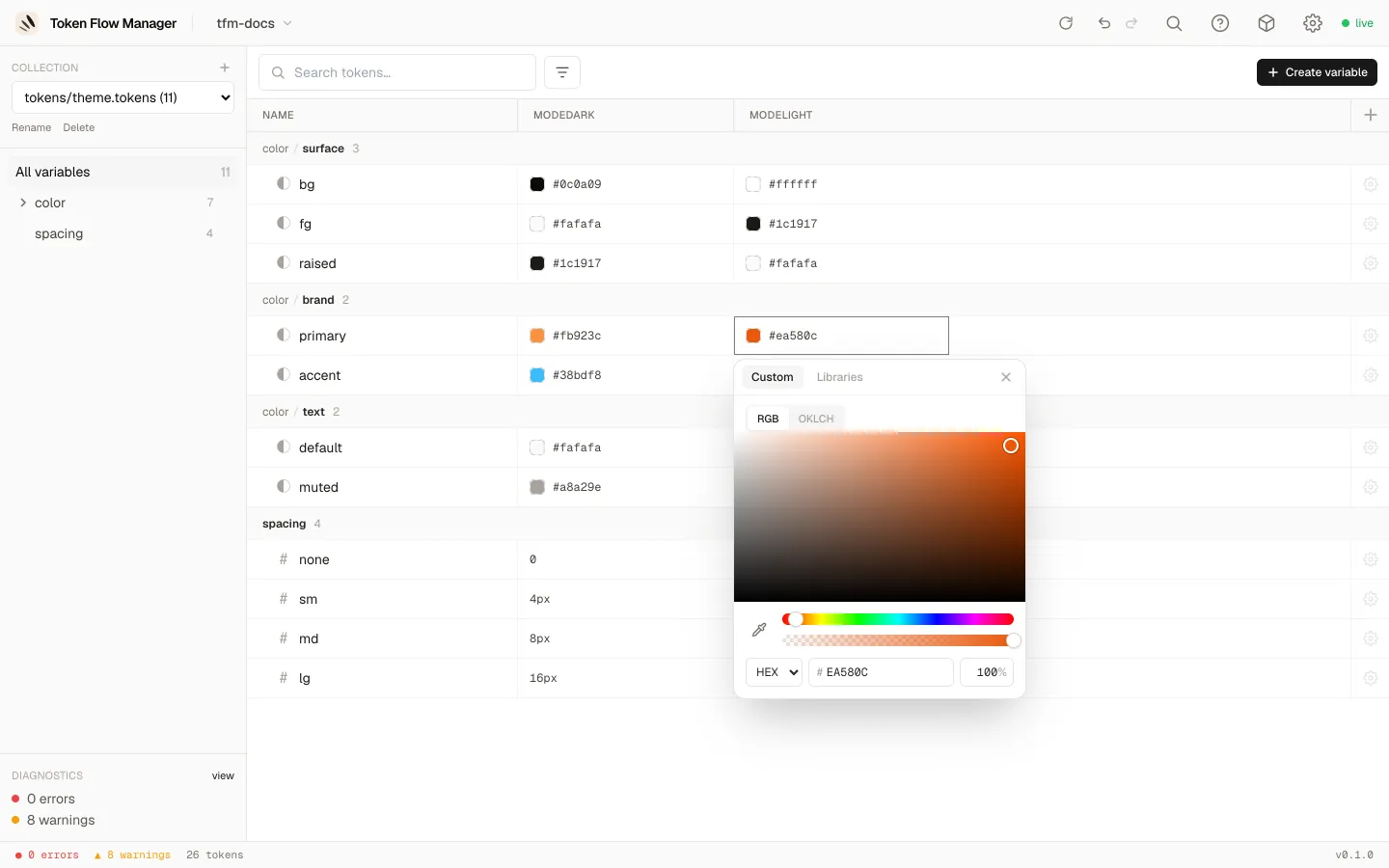
Click any colour cell to open the picker. It has two tabs: Custom (enter your own value) and Libraries (alias another token).
Saturation/value square, hue and alpha sliders, an eyedropper, and HEX or RGB input.
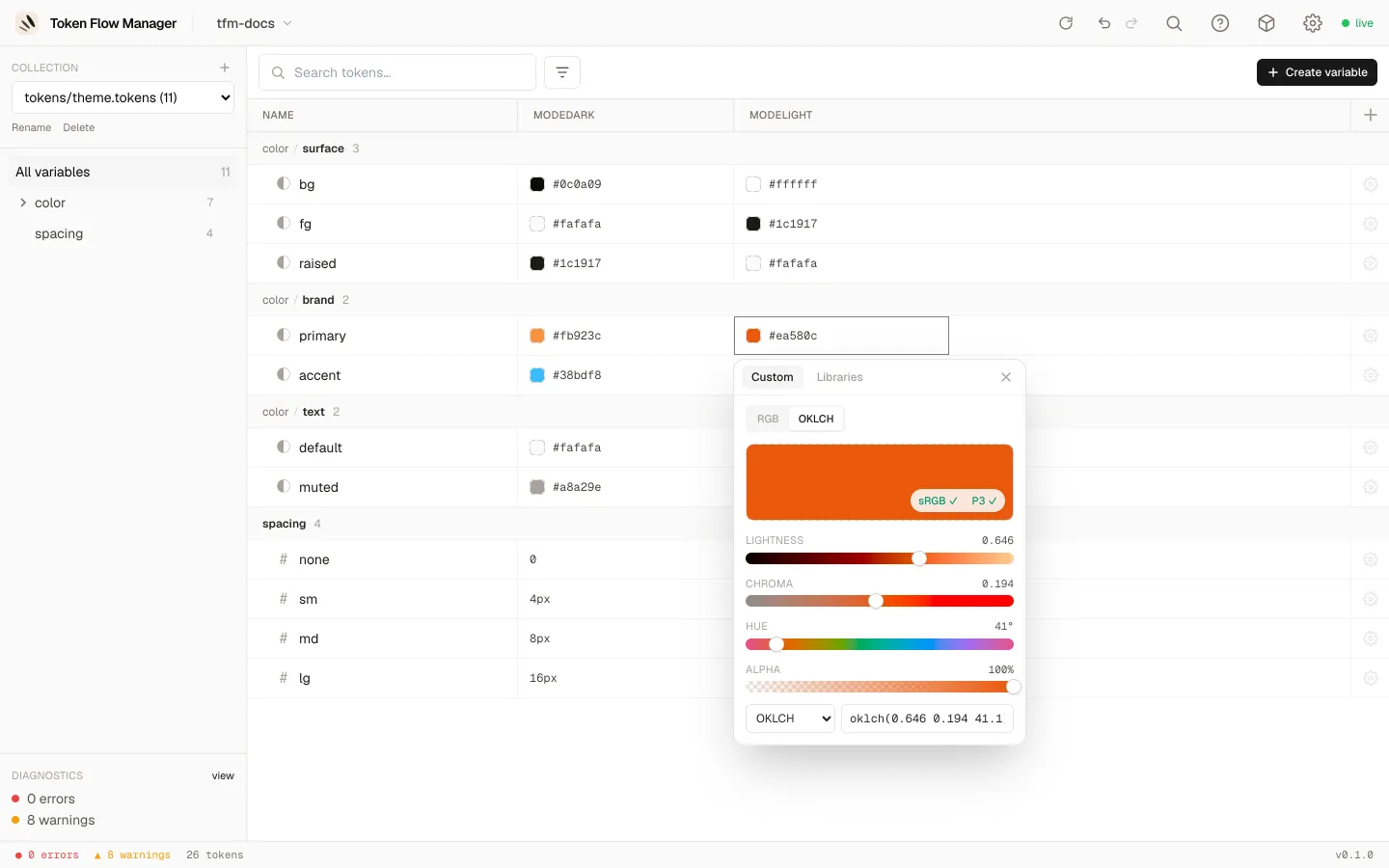
Lightness, chroma and hue sliders with live sRGB / P3 gamut badges, and output as OKLCH, Display P3 or HEX.
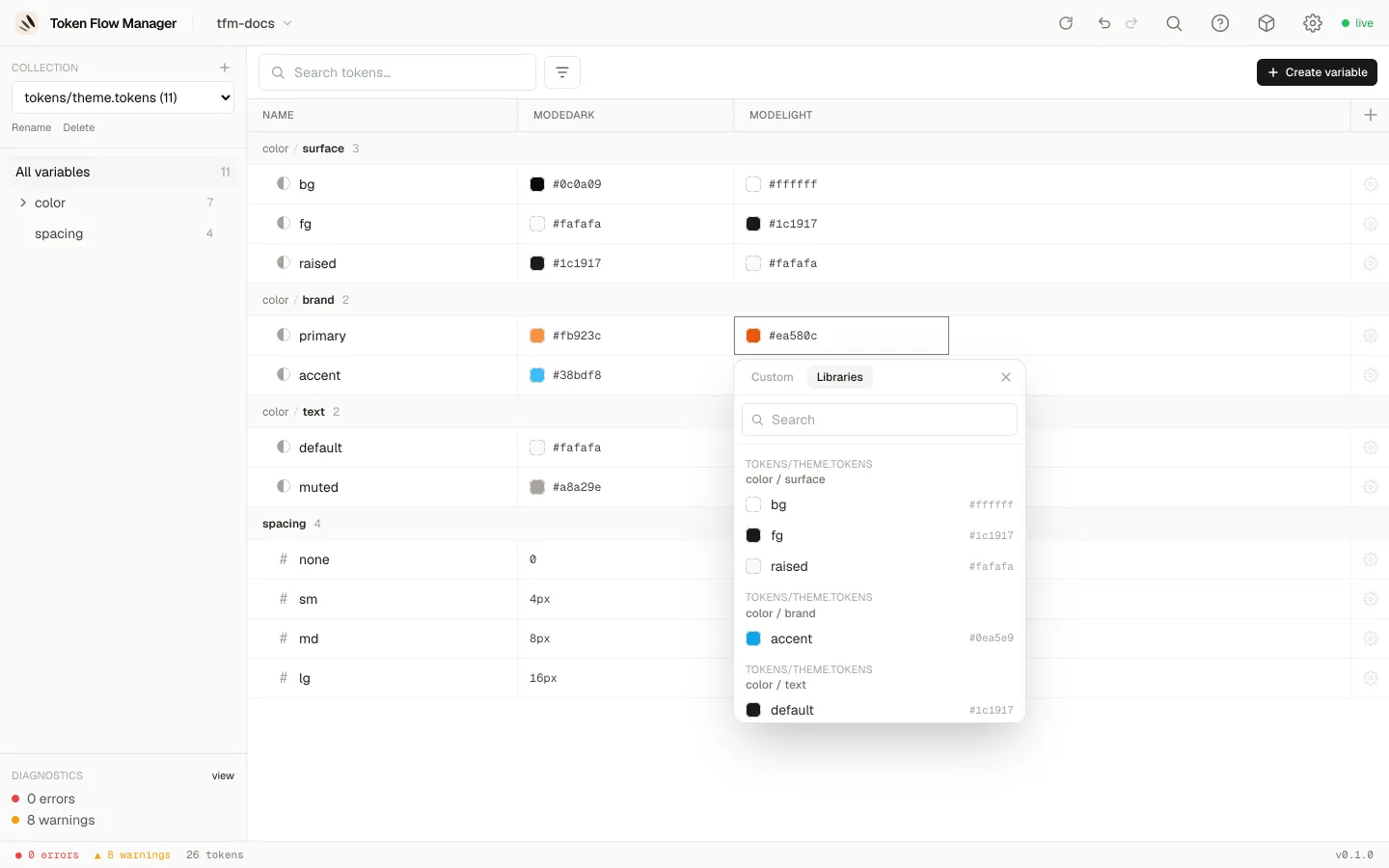
Search and pick another token to alias. Colour tokens show a swatch and their resolved value.
Composite tokens
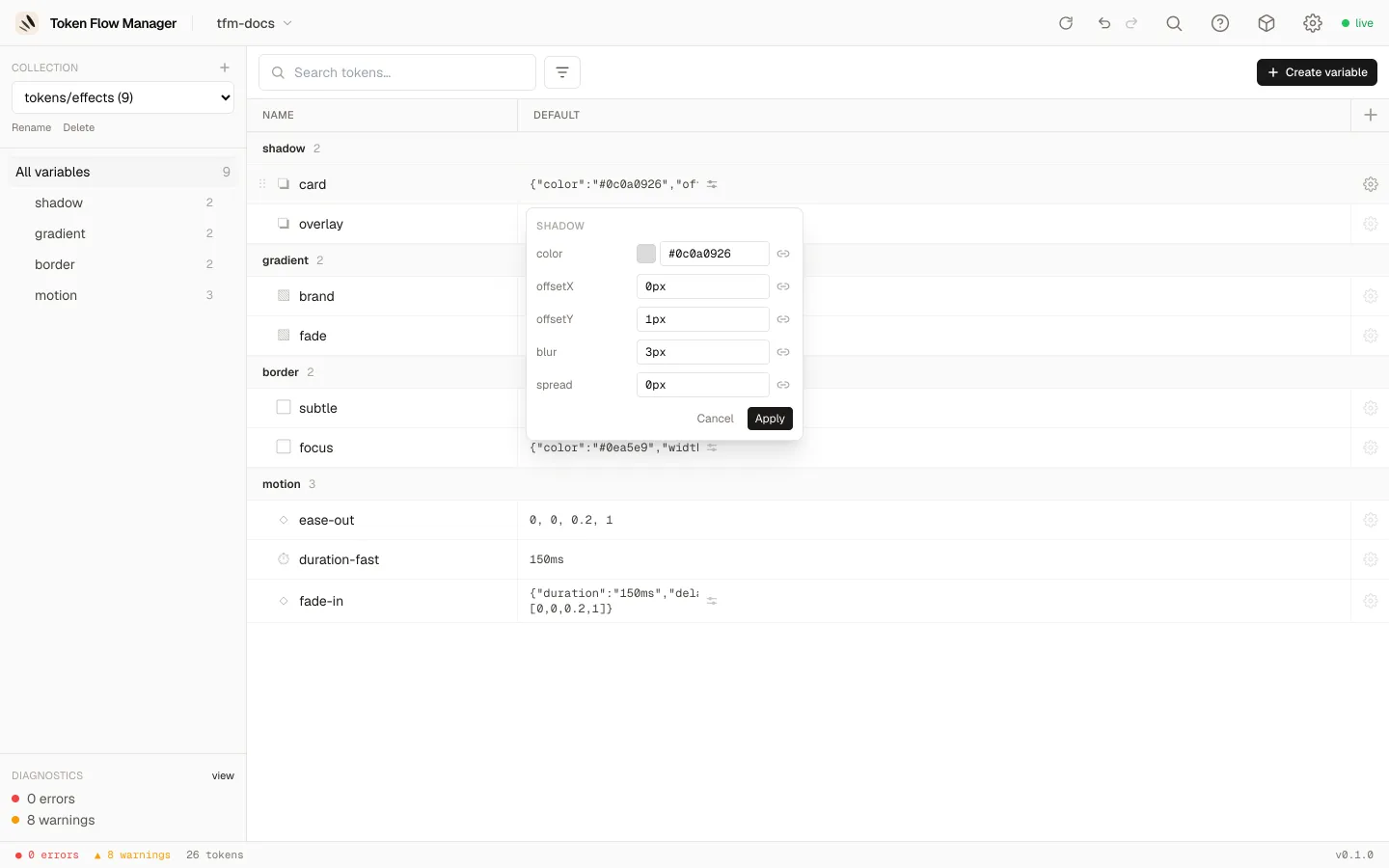
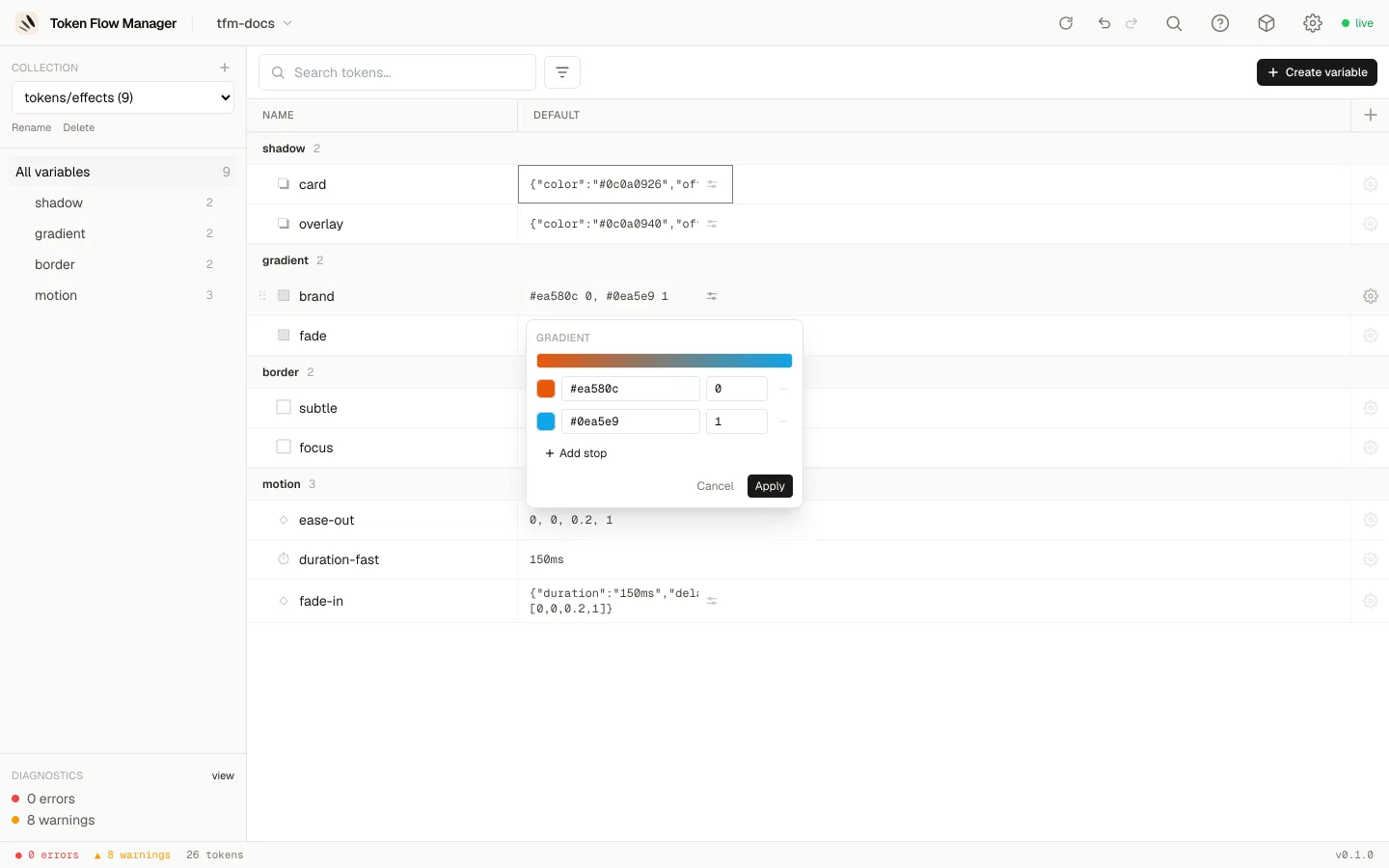
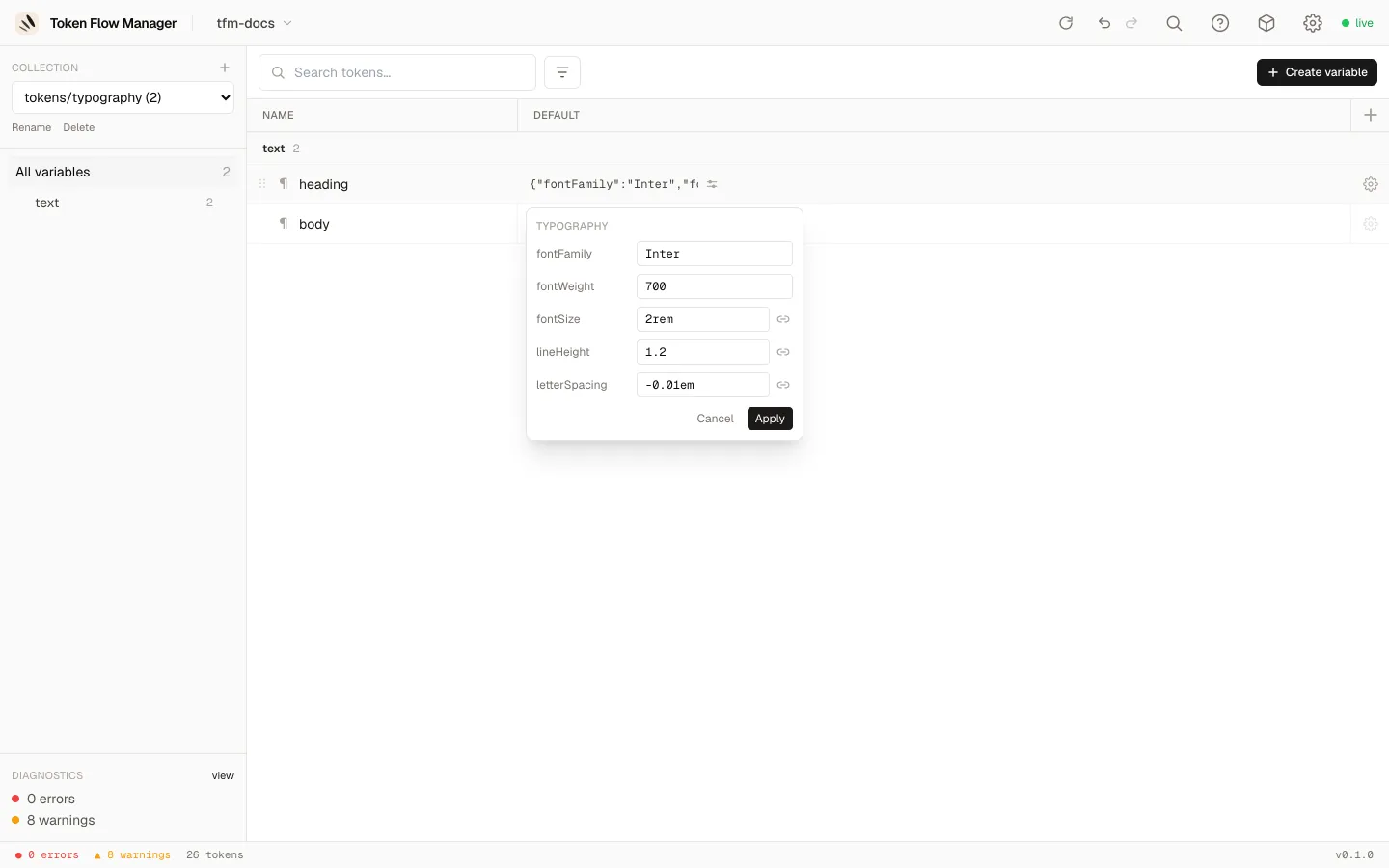
Composite tokens (objects or arrays) get a structured expand-in-place editor. Click the sliders icon on a composite cell. Each field gets the right control: colour fields open the colour picker, dimensions and numbers are text inputs, and you can alias individual fields.
color, offsetX, offsetY, blur, spread.
A preview bar and a list of colour stops (colour + position), with Add stop.
fontFamily, fontWeight, fontSize, lineHeight, letterSpacing and more. Any
field can be a literal or an alias.
border and transition work the same way, each with their own fields.